Quick answer
Vail combines alpine weather, expensive homes, seasonal demand, HOA restrictions, high guest expectations and strict response obligations. The house is not only a place to stay. It is a set of systems that have to work in cold, in storms and under the eyes of guests who paid for a particular kind of week.
A Vail vacation home sits in a market defined by ski weeks, holiday travel and guests who have paid for a particular kind of stay. The operational details are local even when the booking arrives through a national platform.
Owners who treat the home like a sun-belt rental usually discover the difference in January. The issues are not theoretical. They are frozen pipes, unplowed entries, a hot tub that will not recover before Saturday check-in and a neighbor who knows exactly how to file a complaint.
A mountain home is an operating system
Heating, plumbing, snow access, roofs, fireplaces, hot tubs, ventilation and smart-home equipment affect one another. A thermostat set for vacancy can protect pipes and still leave the house too cold for a late arrival. A roof that sheds snow can clear itself and block the front door. A failed internet router can lock a smart lockout of a guest who landed after dark.
The useful habit is to think in connections. If heat fails, water is next. If snow removal fails, parking and trash become guest problems. If a fireplace is decorative rather than functional, the listing has to say so before someone arrives expecting a fire after a cold day on the mountain.
Freeze prevention and heating reliability
Thermostat monitoring is not optional in a vacant winter home. Someone needs to know when a temperature drops, and someone needs to be able to enter if it does. Frozen pipes, boiler interruptions and radiant-heat problems are among the most expensive surprises an owner can receive from a distance.
Garage temperatures matter more than many second-home owners expect. So do unused bathrooms, hose bibs and rooms that sit over unconditioned space. A weekly or storm-driven vacant-home check is cheaper than a ceiling repair after a thaw.
Rapid response is part of prevention. A heating contractor who can come on a holiday weekend is not found in a search result at 7 a.m. The relationship has to exist before the failure.
Smart thermostats help only if someone is watching them and can get into the house when the reading looks wrong. A low-battery sensor, a Wi-Fi outage or a guest who turns the heat off when they leave can create the same freeze risk as an old manual dial. The operating standard is simple: know the temperature, know who can enter and know what “too cold” means for that specific plumbing layout.
If the home uses a boiler, radiant floors or a combination of systems, write that down for vendors and inspectors. A technician arriving without the right context wastes the hour you do not have during a cold snap. Keep filter dates, shutoff locations and prior service notes in one file, not in a text thread from two winters ago.
Snow, ice and safe access
Airport transfers, village parking, garage instructions and how guests reach the mountain should be explained before arrival. Confusion at 10 p.m. after a flight is how a stay starts poorly.
Snow removal is not only curb appeal. Entries, walkways, decks, roof shedding, ice buildup and parking all determine whether a family can get into the house with luggage and ski bags. Late-night arrivals during storms are common in Vail. The home has to be reachable, lighted and honest about where a car can sit.
Ice at a door or on a deck is a liability issue as well as a hospitality issue. Owners who self-manage from another state often underestimate how quickly a beautiful snowfall becomes an access problem.
Roof shedding deserves its own plan. A home that dumps snow onto a walkway or parked car can injure someone or start a neighbor dispute. Decks, gas grills and hot-tub lids also collect loads that guests will not know how to handle. If an area is closed in winter, say so in the arrival note and physically mark it. Ambiguous outdoor space becomes a photograph in a complaint.
Parking instructions have to match the storm, not the July photo. A driveway that “fits three cars” on a dry day may fit one after a plow berm. Tell guests where overflow goes, what the HOA will tow and how late arrivals should handle a full village structure. The first night is not the time to invent that answer.
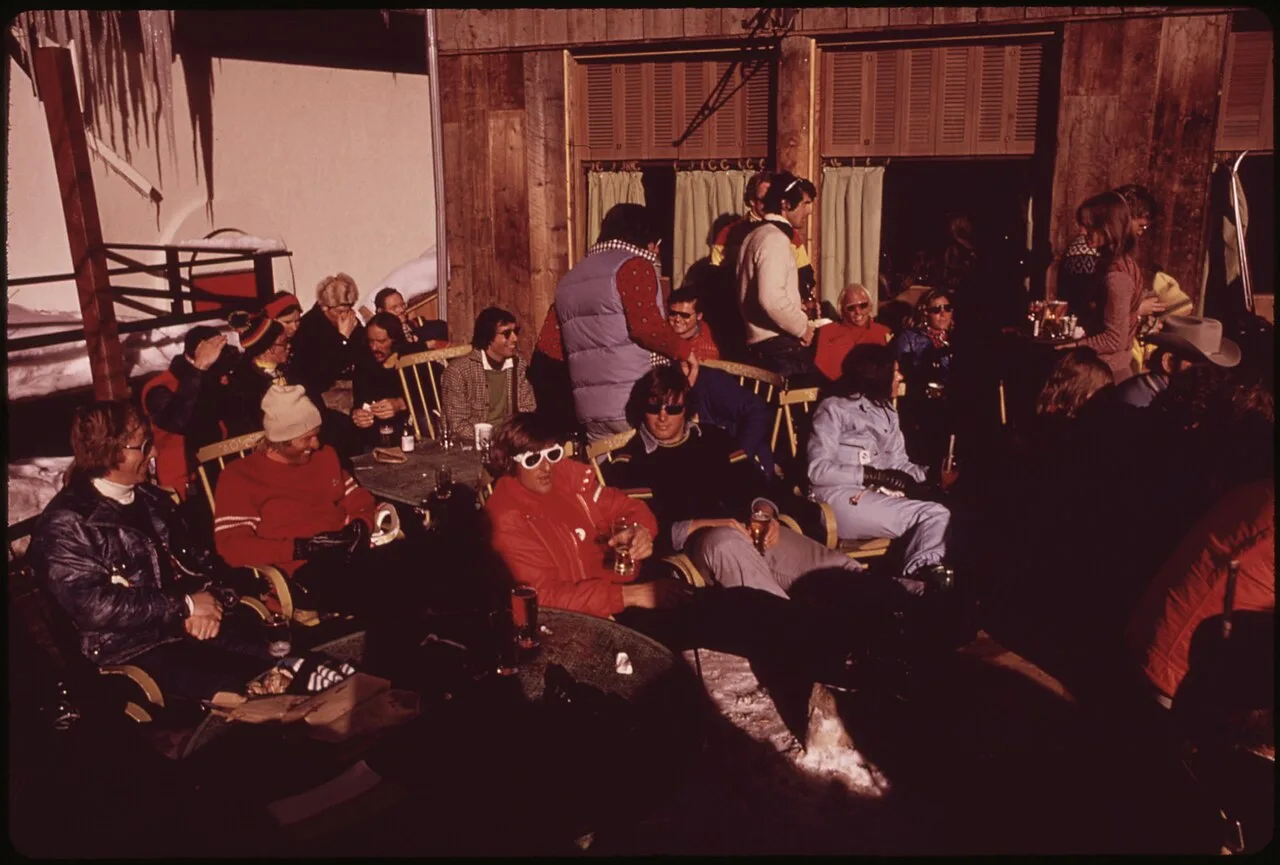
Vail's winter rhythm is older than short-term rental software. The operating pressure of a ski week is not new.
Après-ski in Vail, 1974. Photograph by Ron Hoffman, U.S. Environmental Protection Agency and National Archives. Public domain, via Wikimedia Commons.
Condominiums and HOAs
A village condo can be easier to reach and harder to operate. Building access, front desks, elevators, parking restrictions, quiet hours and shared amenities all sit between the guest and the unit. A missed front-desk instruction can look like a lockout even when the code is correct.
Review HOA rental rules before accepting bookings. Municipal eligibility is not enough if the declaration, condo documents or house rules limit stays, occupancy or advertising. Parking that looks ample in July can be tightly assigned in January.
Neighbor relationships are part of the asset. One noisy week can change how a board treats every future reservation. The compliance details live in the short-term-rental operations article. The practical point here is simpler: the building is a partner or an obstacle, depending on how the home is run.
Vail's compressed high-demand calendar
Winter can book early. Shoulder weeks still need a plan. The calendar is not a straight line, and pricing has to move with it.
Christmas, New Year, Presidents' Day, spring break and major summer events are their own category. Minimum stays, arrival days and rates need to be set with care, then watched as the dates approach. One pricing strategy cannot be used all year without leaving the home either empty or underpriced.
Quieter shoulder periods are not a failure. They are a different operating mode: more owner use, more maintenance windows and more careful gap management. A manager who only talks about peak weeks is not describing a full year in Vail.
Luxury guests notice operational details
Guests notice cleanliness, communication and whether the amenities they booked actually work. In a luxury market, those details are the product.
Linens, lighting, kitchen readiness, hot-water capacity, internet, ski storage and accurate arrival instructions decide the first hour of the stay. A beautiful great room does not rescue a cold shower or a password that does not work. Prompt communication can save a review. Silence rarely does.
Heat, hot tubs, fireplaces, ski storage and kitchens are part of why someone chose the home. When they fail, guests need a fast, calm response. The owner should not be the first person they try to reach.
The arrival experience
A Vail arrival is a small production. Cleaners, inspectors, groceries, transportation, equipment delivery, parking and access codes often have to land in the same afternoon. If one piece slips, the guest feels it immediately.
Tight turnovers are common during holiday weeks. The house cannot merely be cleaned. It has to be warm, stocked, lighted and explained. Someone should walk the home after housekeeping and before the next group arrives. That inspection is where most preventable complaints are caught.
Preventive maintenance versus emergency maintenance
Routine inspections protect expensive finishes and reduce disruptive repairs. A dripping valve, a weakening hot-tub heater or a garage sensor that sticks is cheaper on a Tuesday in October than on a Saturday in December.
Emergency maintenance will still happen. The difference is whether the home has documented systems, vendor contacts and a spending path before the call comes in. Owners who approve every decision from another time zone create delays that guests experience as neglect.
Summer operations also matter
Hiking, festivals, golf and cooler mountain weather create demand that should be managed with the same attention as winter, not treated as leftover calendar.
Summer work looks different. Ventilation, landscaping, outdoor furniture, patios, windows and irrigation come forward. Wildfire readiness belongs on the same list: clear information for guests, working alarms and a plan if air quality or access changes. Event weeks can be as compressed as ski holidays, with their own parking and noise pressure.
Outdoor furniture should be checked for stability and cleanliness before the first June arrival, then again after wind or a crowded weekend. Irrigation that sprays a walkway can look minor until it freezes in a cold September night. Windows and screens that stayed shut all winter often reveal leaks, stiffness or failed seals once guests start opening them for afternoon air.
Wildfire season changes the guest conversation. Keep alerts factual, tell people where to find official information and do not improvise evacuation advice. Working alarms, a clear address, charged phones and a local contact matter more than a long brochure. If air quality is poor, say so before arrival when you can. Surprise is what damages reviews.
Local vendor relationships
Mountain trades, weather and high-demand weeks can make last-minute service difficult. The plumber who answers on Christmas Eve is rarely the one found on a marketplace app that morning.
A good operating file includes preferred vendors for heat, plumbing, electrical, hot tubs, cleaning, snow and lockouts. It also includes backups. When the valley is full, capacity disappears. That is one reason owners comparing companies should ask about local response and vendor coverage, not only software dashboards.
A seasonal Vail home-care calendar
Use this as a working outline, then adapt it to the property. A condo with a front desk needs fewer snow tasks and more building-access tasks. A detached home reverses that balance.
| Season | Home-care focus |
|---|---|
| Pre-winter | Service heating, test freeze sensors, winterize unused outdoor water, confirm snow vendors, check roofs, fireplaces and hot-tub covers. |
| Peak winter | Walk vacant homes, watch thermostats, keep entries and parking usable, inspect after storms and treat every turnover as a systems check. |
| Spring transition | Look for ice damage, roof-shedding issues, mud-season access problems, appliance wear and any HOA work that will affect guest arrivals. |
| Summer | Service ventilation, furniture, irrigation and windows. Prepare for festivals and family groups, and keep wildfire information current. |
| Fall preparation | Close the outdoor season, restock winter inventory, photograph any changes, schedule trades before the first major storm and reset pricing logic. |
What good management should feel like
The owner should receive visibility without being forced to coordinate every cleaner, guest or repair personally. You should know what is booked, what needs money and what the house needs next. You should not be the after-hours switchboard.
Good management also feels calm during the weeks you are in residence. The same team that handles guests should know how to flip the home back to owner mode: restocking, resetting thermostats, removing guest notes and making sure a repair from last month was actually finished. A house that never quite becomes yours again is a sign the operating system is built only for strangers.
That standard is the point of a complete operating plan, which we walk through in the step-by-step Vail vacation rental management guide. If you want AceHost Vail to look at your home's seasonal risks and operating rhythm, start with a confidential conversation or request a property review.
Frequently asked questions
Why is a Vail vacation home harder to manage than a typical rental?
Alpine weather, expensive building systems, a compressed holiday calendar, HOA rules and luxury guest expectations all require more attention than a standard short-term rental.
What fails first in a vacant Vail home during winter?
Heat, plumbing and access are the usual weak points. A thermostat set too low, a frozen line or an unplowed entry can turn a quiet vacancy into an emergency before the next arrival.
Do HOA rules change how a Vail condo should be rented?
Often, yes. Parking, quiet hours, front-desk procedures, occupancy and short-term rental permission can be stricter than municipal rules. Review the documents before accepting bookings.
Is summer easier to manage than ski season?
Summer removes some freeze risk, but it adds ventilation, landscaping, wildfire readiness, patio care and event-week demand. The home still needs inspections, turnovers and a local response plan.